
IGLYO and the Council of Europe Launch a New Inclusive Education Toolkit to Support Safer and More Inclusive Schools for LGBTQI Students Across Europe
IGLYO, the International LGBTQI Youth & Student Organisation, and the Council of Europe are launching their new Inclusive Education Toolkit on 20 November, during the European Education and Skills Summit in Brussels. Developed by the Council of Europe's SOGIESC Unit in cooperation with IGLYO, under the EU and Council of Europe joint project “Combating anti-LGBTIQ violence and hate speech and strengthening awareness-raising and fact-based narratives about LGBTIQ persons”, this toolkit provides practical guidance for education professionals, policymakers and civil society organisations working to create safer, more inclusive and respectful learning environments for all students.
Across Europe, many schools still lack the policies, institutional procedures and training needed to address SOGIESC-based bullying, promote inclusive curricula and respond to opposition to LGBTQI-inclusive education. The consequences for LGBTQI students remain significant.
According to the latest EU Fundamental Rights Agency (FRA) LGBTIQ Survey III, 62% of respondents aged 15–17 reported experiencing bullying by peers and 9% by school staff. Among respondents aged 18–24, these figures were 58% and 12%, respectively. For some students, these experiences affect their education pathways directly: 37% of trans girls, 35% of trans boys and 40% of intersex respondents aged 15–17 reported having changed or left school because of their experiences as trans or intersex students.
These findings underline the need to move beyond isolated responses to individual incidents and towards education systems that actively protect students, challenge discrimination and foster belonging.
Three complementary tools
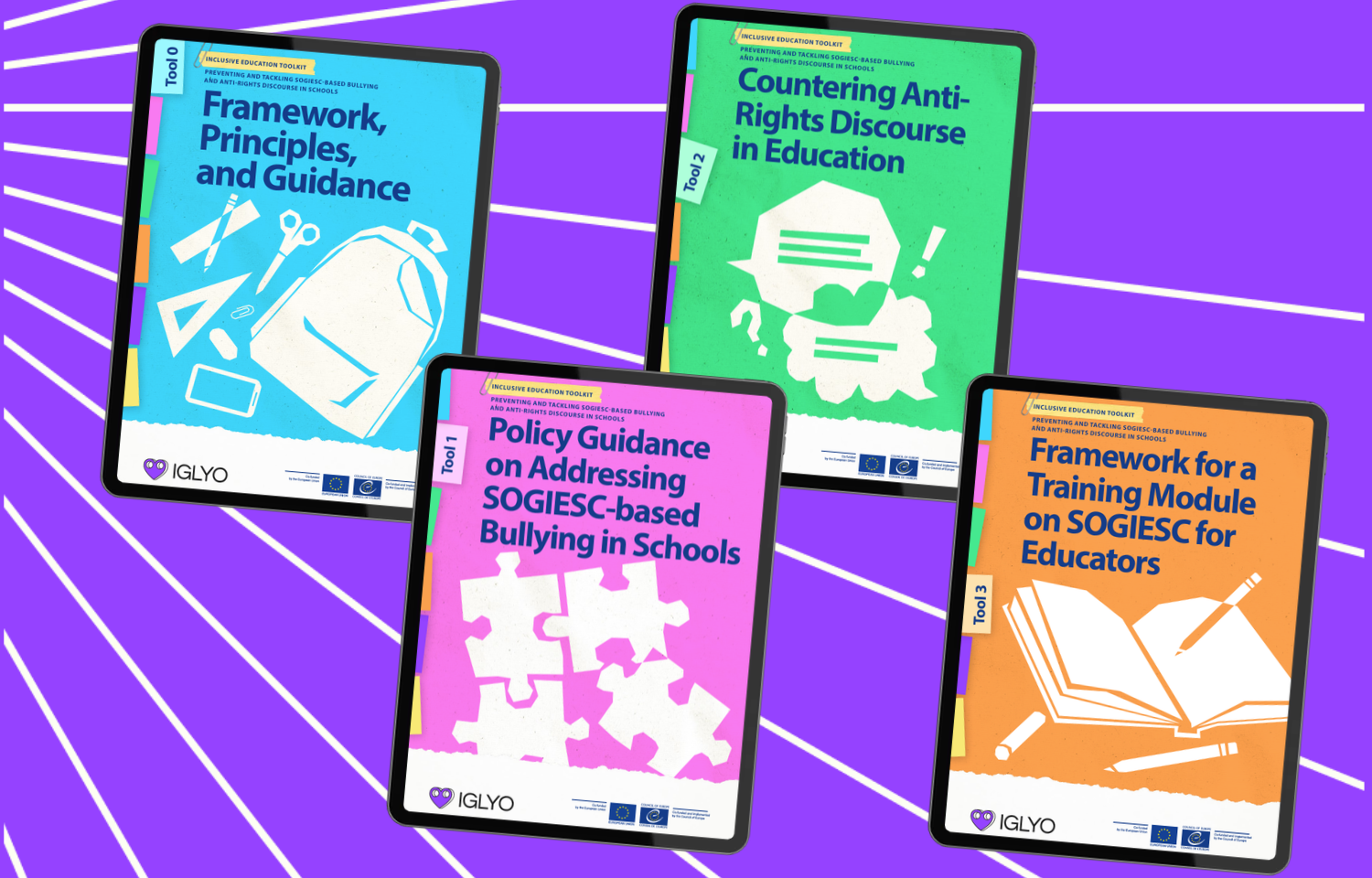
At the heart of this new “Inclusive Education Toolkit for Preventing and Tackling SOGIESC-based Bullying and Anti-Rights Discourse in Schools” are three complementary tools:
- “Tool 1: Policy Guidance on Addressing SOGIESC-based Bullying in Schools” supports the development of stronger institutional frameworks, anti-bullying policies and reporting mechanisms.
- “Tool 2: Countering Anti-Rights Discourse in Education” helps education professionals respond to misinformation, disinformation, polarisation and hostile narratives.
- “Tool 3: Framework for the Development of a Training Module on SOGIESC for Educators” guides on developing training to strengthen educators’ knowledge, skills and confidence in supporting LGBTQI-inclusive schools and curricula.
- An introductory Tool 0 connects the three resources through shared terminology, a common human rights-based framework and guidance on their implementation.
Together, the tools connect policy development, school-level practice and educator training, recognising that educators need institutional support and clear guidance to address discrimination and navigate opposition.
Supporting concrete action in national and local contexts
This toolkit was developed through a participatory, rights-based process involving stakeholder consultations, drafting and review, and draws on Council of Europe, EU, UN and UNESCO standards and guidance. Designed for ministries and education authorities, school leaders, teachers, training institutions and civil society organisations, it offers a flexible approach that can be adapted to different national contexts and education systems.
Beyond providing guidance and resources, the toolkit is intended to support concrete action in national and local contexts. Building on its experience implementing these resources in Malta, IGLYO is keen to support similar efforts across Europe and encourage the adaptation and use of the toolkit in different education systems. We welcome opportunities to collaborate with ministries and education authorities, teachers, education professionals, policymakers and other stakeholders interested in translating the toolkit's recommendations into practice.
Ultimately, the toolkit aims to help education systems turn commitments to equality and non-discrimination into concrete action. By strengthening policies, improving school-level practices, and equipping educators with the knowledge and skills to support LGBTQI inclusion, it seeks to contribute to learning environments where LGBTQI students and children from LGBTQI families can access education safely, with dignity and equal opportunities.

With the support of

This tool was produced with the financial support of the European Union and the Council of Europe. Its contents are the sole responsibility of the author(s). Views expressed herein can in no way be taken to reflect the official opinion of the European Union or the Council of Europe.